


Start with your room, not a universal winner
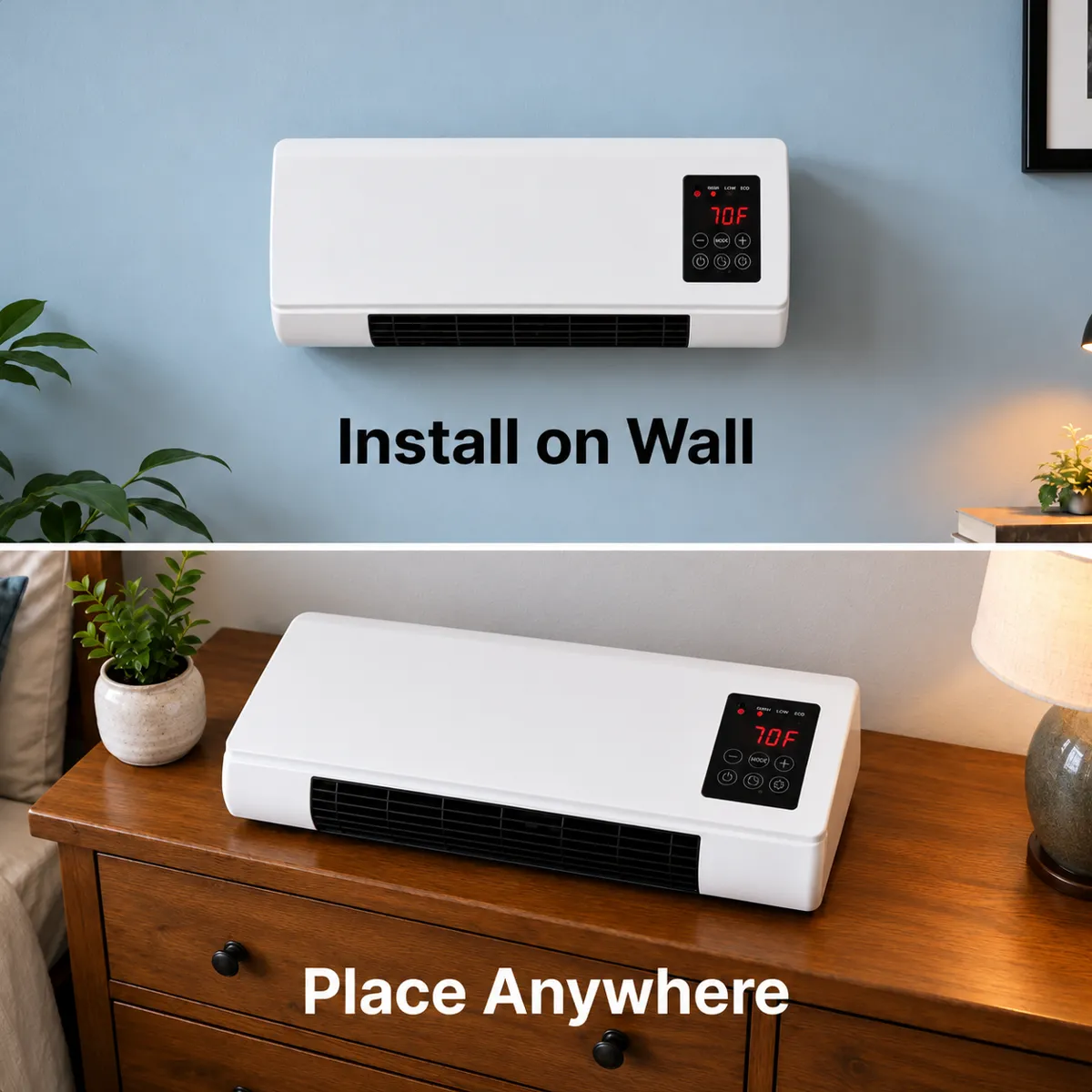
The best heater for a small room is the one that fits the space and your routine. A useful shortlist considers placement, heating needs, controls and whether you can supervise operation. Cozy Cove Pro offers 400W and 800W settings, wall or tabletop placement and a wireless remote alongside a touch panel. Those features may suit an occupied bedroom, office or living room, but they do not establish that it is the best choice for every person. Compare your needs with the listed specifications before buying.
Treat coverage as an upper figure
Cozy Cove Pro lists coverage up to 549 sq ft. That number is not a guarantee that every space within that area will feel the same. Insulation, drafts, layout and your preferred warmth all matter. A room with an open doorway may behave differently from a closed room of similar size. Do not choose solely from an area figure, and do not assume that adding units is the right answer to a difficult space. This is a room-heating option, not a whole-house heating system.
Bedroom comfort needs a clear routine
In a small bedroom, placement matters as much as controls. Keep the heater away from bedding, curtains and clothing, and make sure objects cannot fall onto it. Use it while you are awake and present, then switch off before sleeping. A wireless remote can make adjustments more convenient, but it does not make unattended use appropriate. Avoid choosing on unsupported claims of silence or overnight protection. Read the bedroom guide and the safety advice together before deciding where it would sit.
Office placement should survive a busy day
A home office can become cluttered even when it starts the morning clear. Papers, bags and clothing should not encroach on the heater or obstruct airflow. Wall placement may suit the room arrangement, while tabletop use needs a firm, stable position. Neither choice removes the need for clear space and supervision. Think about where you sit, where you move and how you reach the controls. The office guide gives a room-specific starting point, and the user guide explains general setup considerations.
Compare power and running cost honestly
The 400W setting draws less electricity per hour than 800W, but lower power also means less heat output. At an example rate of 17¢/kWh, continuous operation costs about 6.8¢ per hour at 400W or 13.6¢ at 800W. These are examples, not a prediction for your bill or proof that the heater will replace another heating source. Your rate and operating time matter. Read the energy-cost breakdown and compare the whole heating routine rather than selecting a heater from the smallest hourly figure alone.
Keep the shortlist focused on suitable spaces
Do not choose this heater for a bathroom or a location near water. This guide also does not recommend garages or workshops. Focus on suitable indoor living spaces where you can follow the supplied instructions. The ceramic PTC element and overheat auto shut-off are listed features, not a reason to relax precautions. The heater weighs 2.7 lb and has a listed 19.3 in size, but do not assume portability makes every location acceptable. Check the setup requirements again whenever you change where it is used.
Choose quantity after deciding suitability
One heater costs $89.99. Two cost $143.98, or $71.99 each, while three cost $161.97, or $53.99 each. Shipping is free on two or more. The lowest unit price is useful only if you actually need the quantity; it does not establish better heating or lower running cost. Review the price guide after deciding the heater suits your room. There is a 90-day money-back guarantee, and questions can go to support@getcozycovepro.com. Read the refund information so you understand the next step if it is not right for you.
Make a room-specific decision
Before ordering, picture a normal day in the room rather than an idealized empty space. Think about curtains being opened, a chair being moved or a throw being left nearby. Check that the heater can stay clear through those changes and that you will be present during operation. If a suitable position is not available, a compact design alone does not solve that problem. Likewise, a remote is only useful after placement and heating needs are satisfied. A good buying decision weighs those practical details together instead of relying on a single specification, a bundle price or a broad best-heater label.